



- -4%
The production of ITR sprockets and segments for mini excavators is suitable for a wide selection of models of tracked machinery.
From mini excavators to mining machines. The sprockets are produced through a casting process, while the segments are manufactured by forging.
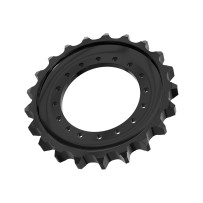
Sprockets are cast, machined, and heat-treated products, generally used for excavators or other machines with undercarriages working in similar applications.
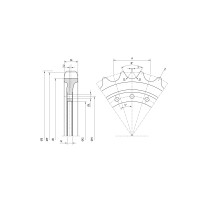
Drive sprocket ITR for MITSUBISHI LD1000
The range of ITR drive wheels includes equipment from JCB® 8008 (machine operating weight 0.95 tons) to KOMATSU® PC 1250 (machine operating weight 110 tons).
Drive sprocket ITR - Functionality
Bolt mounting. Tightening method in the machine's operating manual. It is important to obtain information on the installation of the chain wheel bolt and torque specifications.
Functions: Transferring driving loads from the main transmission to the track via bushings. Durability equal to at least one side of the bushing, resistance to cracking. Sprockets are produced to precisely fit the bushings. Strictly controlled production processes to ensure proper equipment assembly. Advantages of bolted sprockets: Limited maintenance and shorter downtime. No risk of misalignment. Reversible - transferring wheels to opposite sides of the machine can increase sprocket lifespan. Drive wheel rings are forged or cast from deep-hardened steel, offering nearly twice the hardening depth of regular steel. Material SCMn3A. Hardness 50 – 55 HRC.
The production of ITR sprockets and segments for mini excavators is suitable for a wide selection of models of tracked machinery.